
Endurance
What I learned from Shackleton’s Antarctic calamity
CONTEMPLATIONA PURPOSEFUL LIFE
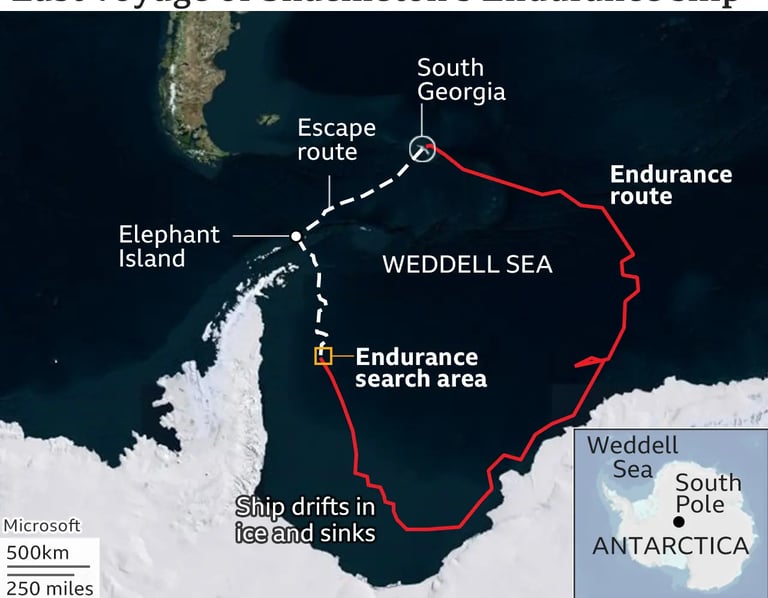
Ernest Shackleton’s name is inseparably linked to one of humanity's greatest survival stories. He and his crew of 27 mariners set out in 1914 to cross the Antarctic continent on foot.
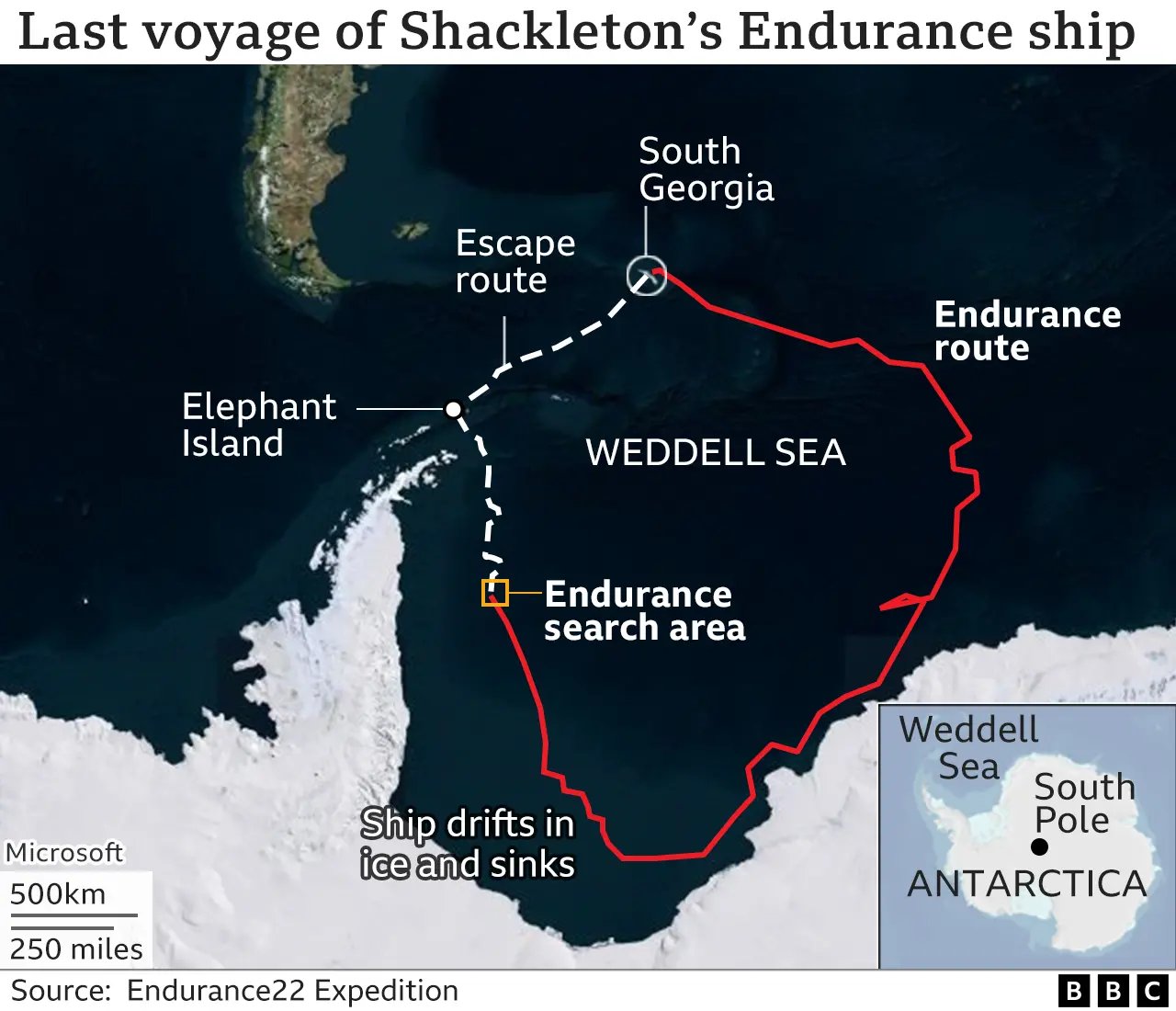
The expedition was cut short when their ship became trapped in ice in the Weddell Sea. What followed was a nineteen-month fight for survival – man against the elements of the most inhospitable place on earth.
They faced two polar winters of complete darkness, the threat of starvation, arctic winds, unpredictable ice floes, and the risk of losing their sanity.
I wonder if, looking back, Shackleton recognized that the name he bestowed upon their vessel would capture the central quality he and his men chose to embody during their harrowing adventure – Endurance. This strength of character allowed them to facilitate their rescue without losing a single soul, while the ship bearing that name now rests tattered and broken, 10,000 feet beneath the icy surface.
Alfred Lansing’s 1959 book, bearing the title of Shackleton’s ship, offers fascinating insights into the lives and minds of the 28-man crew of the Endurance as they abandoned ship and became pack ice pirates.
In today’s contemplation, I would like to share with you the first of the three most important takeaways I had after my first reading of this book:


BE THE FIRST TO KNOW
Join the Chisel&Feather Email List





ABOUT
THE
AUTHOR


VIDEOS & SOCIAL MEDIA
SHARE YOUR THOUGHTS


Thank you for reading Chisel&Feather!
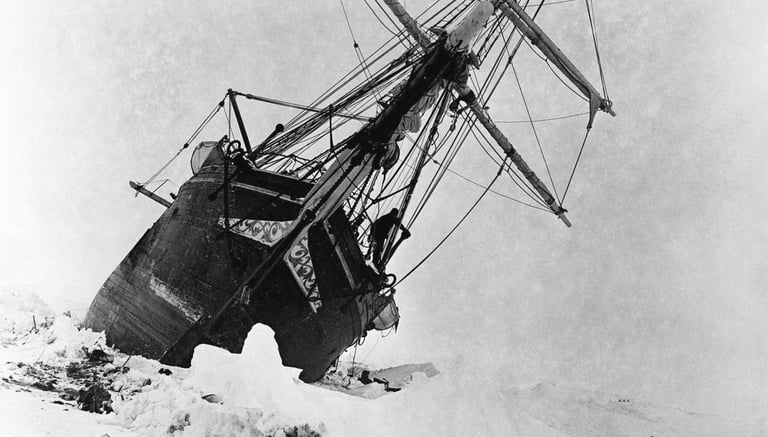
The Endurance gets crushed by ice floes before sinking.
Hopelessness is Easy
Overcome by growling stomachs, wet clothes, and freezing temperatures, the shipwrecked crew of the Endurance glare out across the Antarctic wasteland and are stricken by grief. Howling winds and echoes of crunching ice remind them that they are intruders in a land that wants them dead.
In such instances, becoming hopeless is easy.
Hopelessness gazes into the wilderness and sees no path of salvation. It does not demand the eye to strain as it keeps watch for a way out through the fog. It does not demand the mind to take stock of provisions, calculate rations, and prepare for the long haul.
Hopelessness, as the name suggests, refuses to cling to hope and, in doing so, spares itself the pain of disappointment. To hope is to acknowledge that things can change for the better. To hope demands patience and action driven by expectation, and in doing so, it leaves one vulnerable to disappointment.
To accept hopelessness is to preemptively accept defeat in order to avoid being struck by failure after exertion.
Interestingly, hopelessness can easily be sold as a kind of pessimistic wisdom.
“I simply see the reality of our situation,” it utters as it masquerades as the only quality strong enough to accept dire truths.
But is it really strong? Or is it weak – in the same way that it is weak to beat up the little guy?
Hopelessness is easy because it refuses to try. It refuses to believe. It only surrenders.
It demands nothing. It is a premature capitulation in order to avoid disappointment – ironically leading to the very thing it claims to prevent: certain failure.
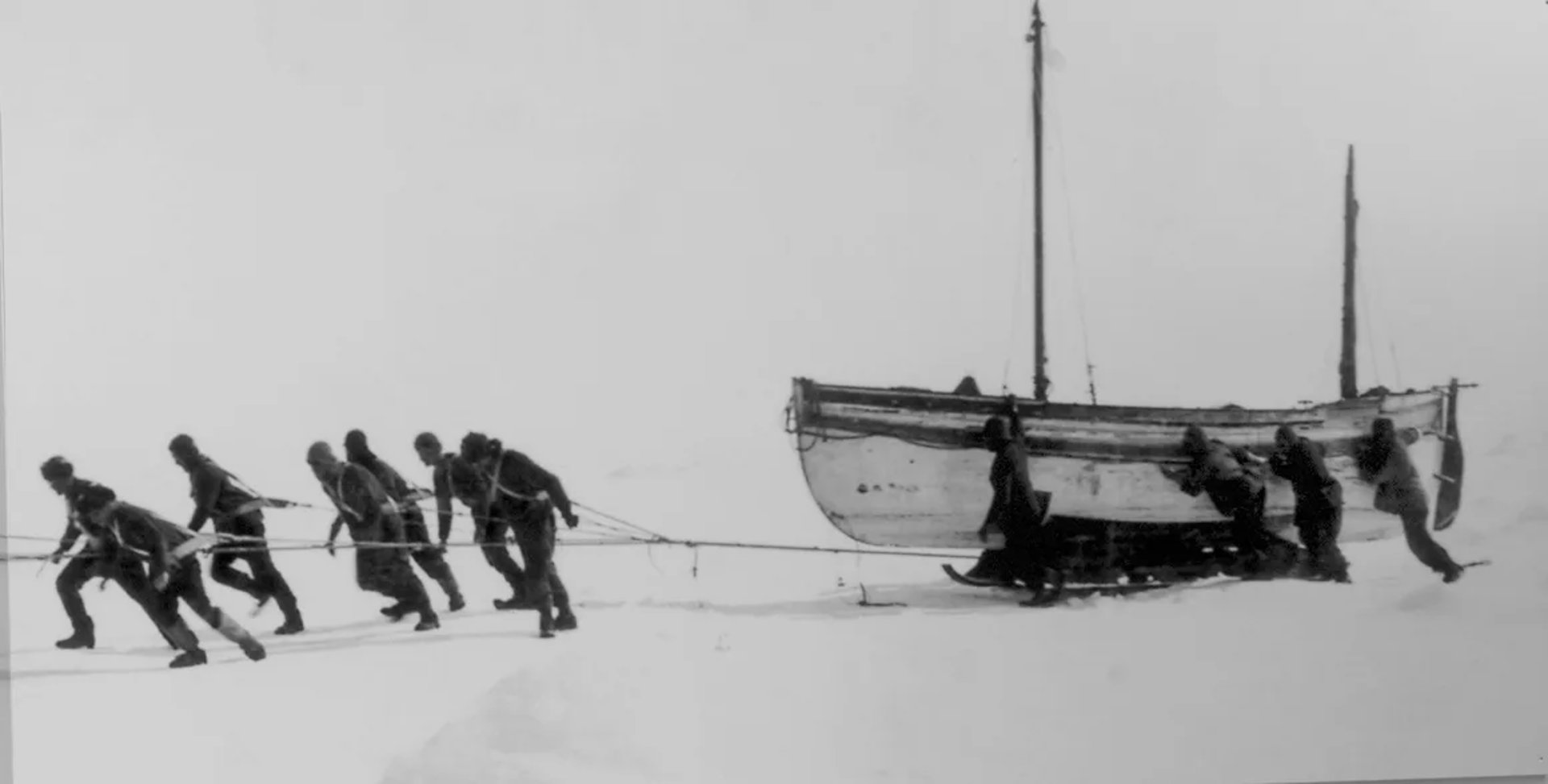
Shackleton's journey - 19 months of ice.
What then is the significance of hope?
Hope is not an unwillingness to acknowledge dire situations, such as the men of the Endurance experienced. It is simply the willingness to believe the current situation can end in salvation.
It is to put forth the effort of continuously staring into the mist, on the lookout for a path.
It is to have the backpack strapped and ready to go at a moment's notice. And as the days pass and turn into months and finally into years, it is the strong who still cling to hope – against the odds, against better judgment.
Interestingly, only a few of Shackleton’s men ever expressed hopelessness – a testament to their hardiness and Shackleton’s leadership. But on occasion, hopelessness did arise. And when it did, it spread through their camp like a plague, infecting those without the antibodies to defend against its onslaught.
Before I began reading “Endurance,” I had expected morale to be much lower during their nineteen months stranded in Antarctica. The mental resolve the men demonstrated through every challenge they faced is truly admirable. They certainly clung to hope. Shackleton himself, according to his journal, almost never doubted that they would return to civilization.
Hopelessness is easy.
Clinging to hope is hard…
… for castaways in Antarctica as well as for you and me.
Continued in Part II - "In the devil of a hole..."
Interested in character and purpose? Click here.
Interested in discovering other topics? Click here.
"Northward, Ho!" - Escape lies only in perseverance
Source: Wikipedia
Chisel&Feather
Copyright© all rights reserved