

Code Talkers (Part II)
The world of Emerson, Shakespeare, and John
CONTEMPLATIONDECODING LANGUAGE
Author’s note: The following contemplation may be somewhat challenging to understand. The topic is, however, of utmost importance. I want to encourage you to read slowly and allow yourself to seriously consider the subject matter. Be critical – do not simply accept the information as fact. If you have thoughts or questions, please send me a message.
Before you continue here, be sure to read part one.
Here is a brief summary of the two most important points I introduced in part one of this contemplation:
Language is a system of codes.
Understanding language correctly means the right folders with information and images are accessed in one’s mind.
Now, if you got through part one, you may be wondering why I kept harping on about language.
Why does it matter that language is a code that, when correctly deciphered, accesses files in one’s mind?
At first glance, this observation may seem insignificant. After all, in most areas of our lives, we understand the language being used without consciously decoding it. The reason we can do that is that language never stands alone. It always appears in a specific context. In most instances of communication throughout the day, we are familiar with that context and have the necessary framework to make sense of the messages we receive (more about that here).
However, the more the context of a message is removed from my usual framework of understanding, the more effort I need to exert in order to understand it correctly.


BE THE FIRST TO KNOW
Join the Chisel&Feather Email List




ABOUT
THE
AUTHOR


VIDEOS & SOCIAL MEDIA
SHARE YOUR THOUGHTS


Thank you for reading Chisel&Feather!


The human mind – a system of drawers, files, and folders filled with information and images.
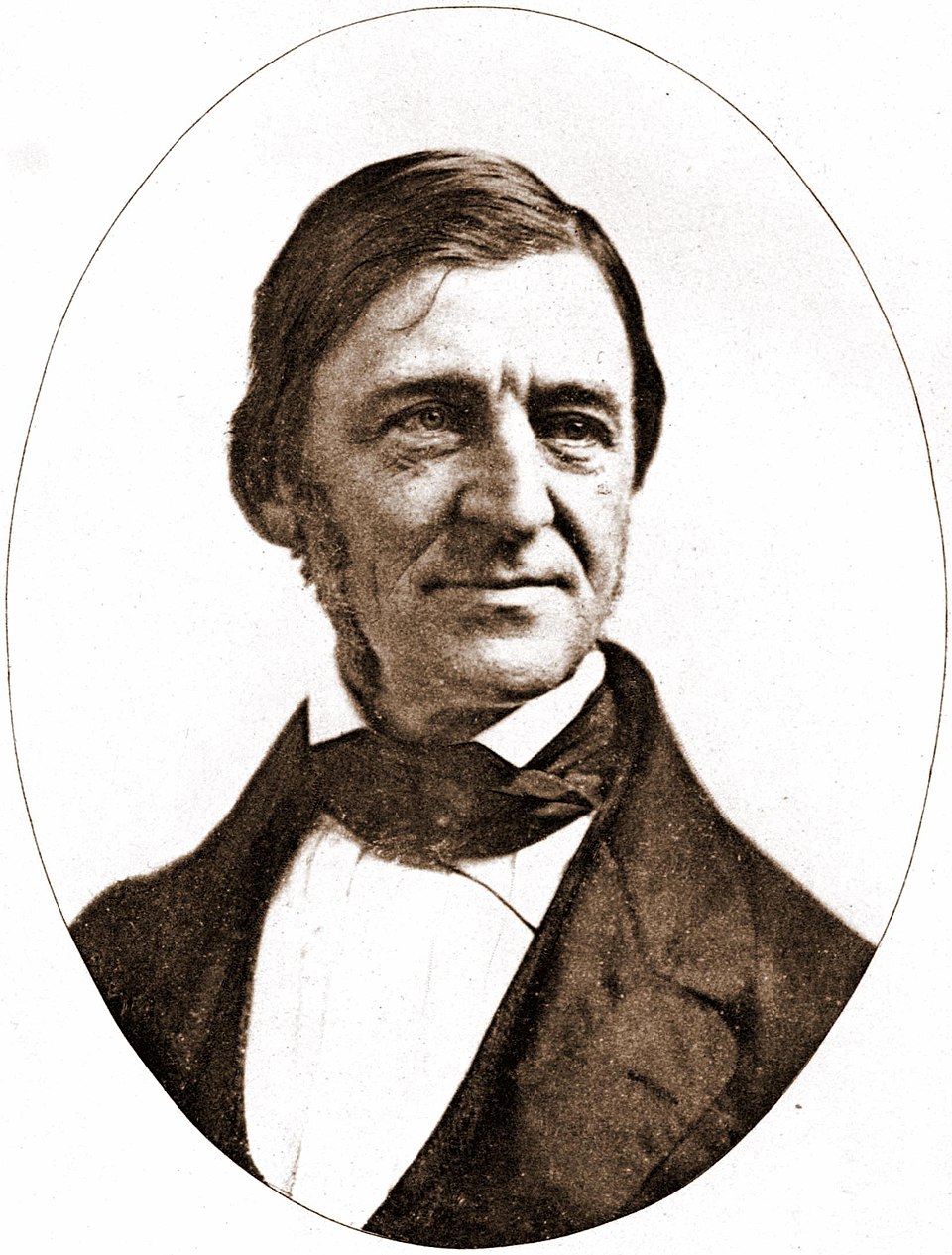
I experienced this “distant context” firsthand while reading some of Ralph Waldo Emerson's works.
Emerson wrote in 19th-century America. Some of the words he used were unfamiliar to me. I recognized others, but the meanings I associated with them did not fit the context within which he had placed them; their meanings had changed over the years. The images and comparisons he used felt foreign to me. I had to read slowly and carefully to understand what Emerson was saying. I had to research words and phrases to make sure I understood them correctly.
If I were to go further back in history and read William Shakespeare’s 16th-century work, I would need to look up even more words, read sentences even more slowly, and exert even more effort to understand the words he penned … even though he, too, wrote in English.
Why is this?
I believe it is because Shakespeare’s world is even more foreign to me than Emerson’s. This is not only true of the “language” he uses but also the context in which it is set.
I could look up every word Shakespeare wrote and still misunderstand his message – still decode it incorrectly because the folders of images and information in Shakespeare’s mind differ vastly from those in my own mind.
Both Emerson and Shakespeare are writers of their time.
Their work must be understood in the context of their world. This is absolutely crucial.
If I disregard the time in which they wrote, the customs of those times, the audience they intended to reach, the men that Emerson and Shakespeare were (their education, upbringing, and milieu), the genres they selected for each work of literature, and the intention behind their words, then I set myself up for failure, leaving myself no option BUT to misunderstand the messages of these great writers.
Would it not be foolish of me – perhaps even disrespectful – to scan a few lines of Emerson and then disregard him because his writings appear somewhat loony and incomprehensible?
Would I not be the loony one?
After all, if I do not understand him, isn’t it a very real possibility that it is less due to his words and more because I simply do not understand his world?
R. W. Emerson (1803-1882) - "the most gifted of the Americans," according to Nietzsche.
Correctly understanding language is not just about learning vocabulary.
It is about reading or hearing a message and having folders with images, files, concepts, etc., appear in the recipient’s mind exactly as the author or communicator intended.
This is a monumental task, and it only gets bigger: As I mentioned earlier, the farther the context of a message is removed from my usual framework of understanding, the more challenging it becomes to understand.
Why does all of this matter?
What bearing does it have on my life?
As stated at the beginning of this writing, the processes I am describing here generally occur automatically. After all, we are masters of language.
However, if I believe it is of value to read works from authors of cultures and languages foreign to me; if I believe it is of value to read works from authors of historical eras long past; if I believe it is of value to understand the writings of the authors of the scriptures to their fullest extent, then understanding language is of utmost importance.
The most straightforward approach I have found to understanding foreign writings better is to focus on the following questions (which I introduced recently in “Not in a Vacuum”):
Who is the original author of this writing?
Who is the intended recipient of this writing?
What is the real-world setting of this writing?
What is the original genre of this writing?
What is the intended purpose of this writing?
Answering these questions takes effort, research, and patience. But working through these steps will help readers more accurately understand any writing – whether it was written by Emerson, Shakespeare, Plato, Marcus Aurelius, Paul of Tarsus, or John, the son of Zebedee.
If we wish to take authors seriously, we must make the effort necessary to understand their messages as they intend them to be understood.
In order to understand their messages accurately, we must become acquainted with the world in which they wrote.
To do anything less is to misunderstand.
Interested in more about language? Click here.
Interested in discovering other topics? Click here.
Chisel&Feather
Copyright© all rights reserved