

We Must Suffer
How we inflict pain on ourselves
CONTEMPLATIONIN PURSUIT OF TRUTH
I have been thinking about pain.
In particular, I have been thinking about how I cause myself pain.


BE THE FIRST TO KNOW
Join the Chisel&Feather Email List




ABOUT
THE
AUTHOR

VIDEOS & SOCIAL MEDIA
SHARE YOUR THOUGHTS


Why we suffer: Errors cause pain and the opportunity to correct course.
I remember helping my little brother onto a playground zipline as a child. I then ran ahead of him, glancing back over my shoulder as he zipped along behind me. At the end of the line, his swing hit the spring and bounced him back the way he came. I was not so fortunate. I smacked into the big wooden post that held the wire up. It hurt – a lot.
I think this story perfectly captures how self-inflicted pain operates:
When our observations, understanding, decisions, actions, values, convictions, or beliefs deviate from reality, it is through pain that we recognize this.
Out on the playground, little Coren forgot about the post at the end of the zipline. The post kindly reminded him that it was indeed there. The reminder was painful.
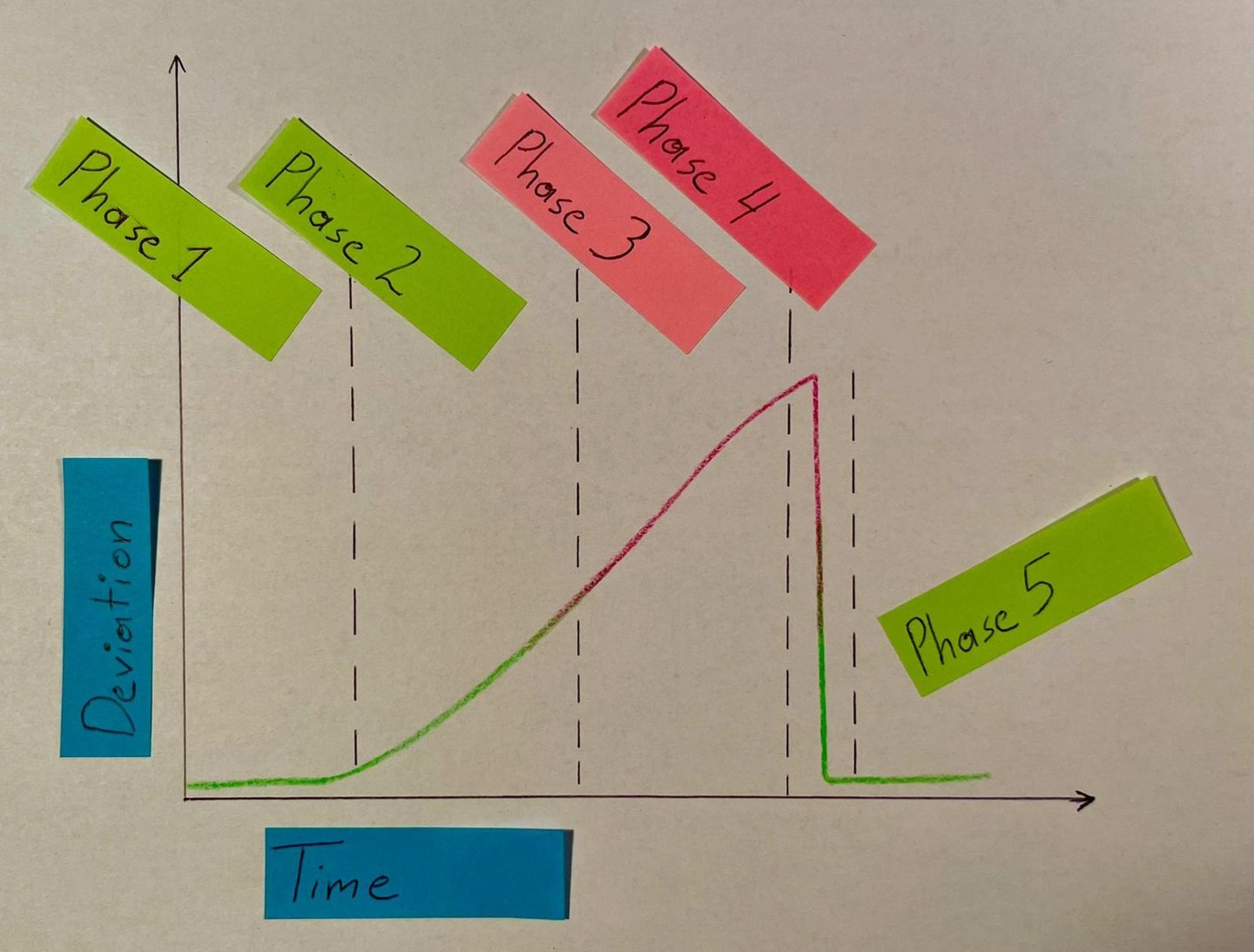
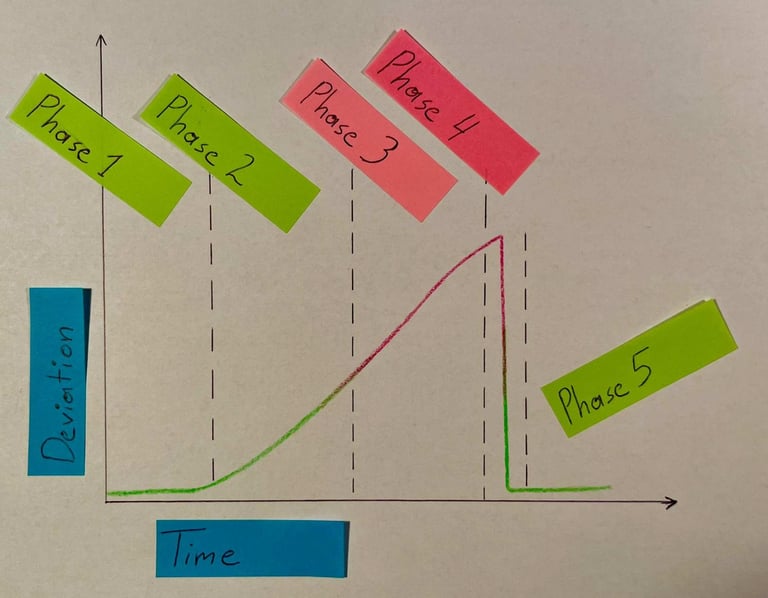
I have created a graph below to illustrate this process.
The x-axis represents time.
The y-axis represents the degree of deviation of understanding, actions, values, etc., from reality. Y=0 indicates perfect alignment with reality. The larger the y-value, the greater the deviation from reality.
This graph has 5 phases:
Using the “Coren runs into the post” example, these stages appear as follows:
Phase 1) I help my brother onto the zipline. I know how a zipline works and am aware of the post at the end. My understanding and actions are well-aligned with reality.
Phase 2) I have the idea of running in front of my brother. The post fades from my mind, and so my perception of reality gradually begins to deviate from true reality.
Phase 3) I begin to run, looking back. I laugh, having fun, unaware that as I get faster and faster, I commit more and more to my false perception.
Phase 4) I hit the post. This is the moment when reality forces me to recognize my mistake. I was able to ignore the post until it stopped me in my tracks. I feel pain, and I once again have an accurate perception of reality: There is a post at the end of a zipline.
Phase 5) As I sit on the ground, rubbing my head, my understanding of reality is restored. I learn from my mistake and realign my views, now knowing that I must remain aware of the post at the end of the zipline.
Now, obviously, this model can be applied to far more than children’s games and playgrounds. On a more conceptual level, these five phases look like this:
Model of Coren running into the zipline post.
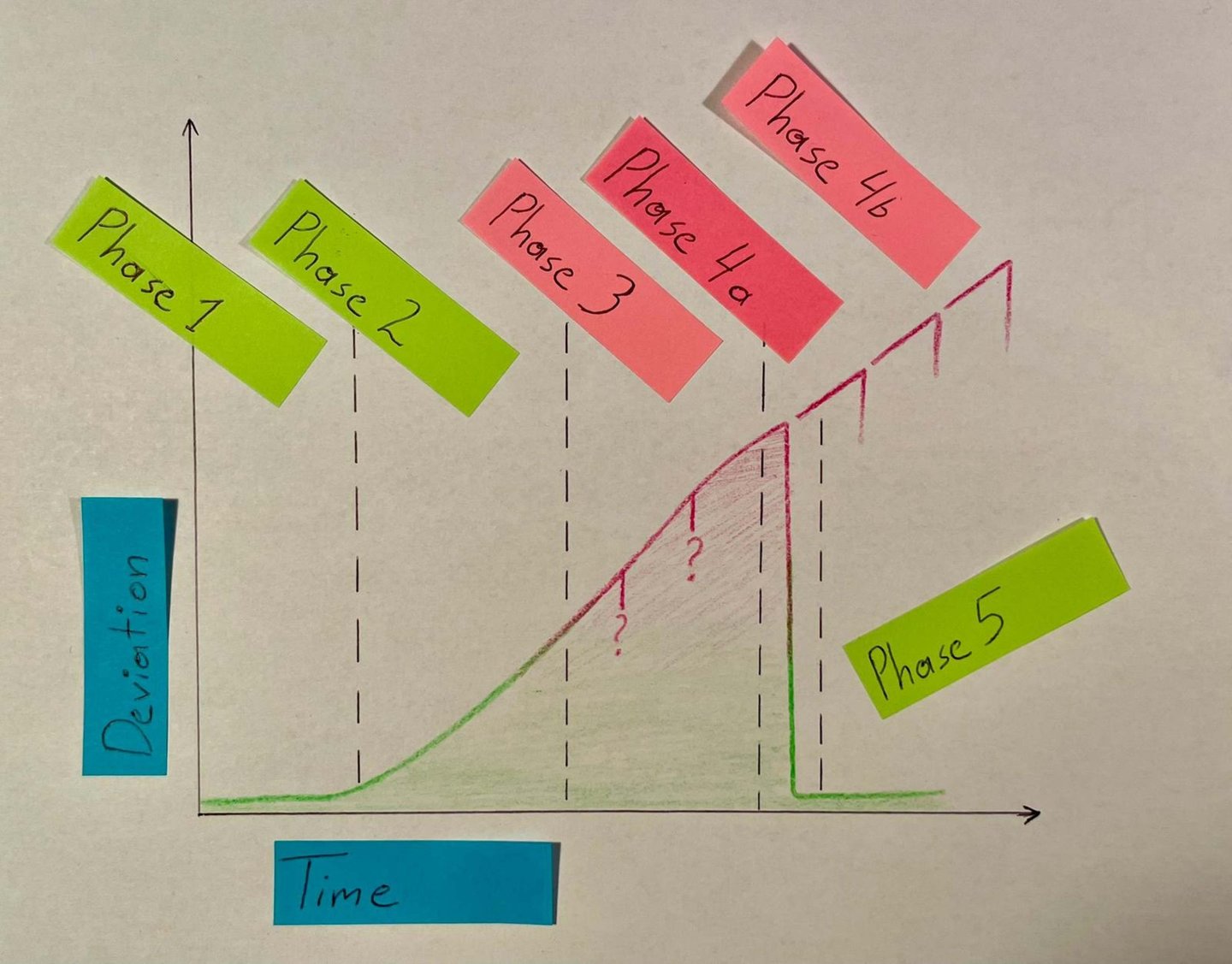
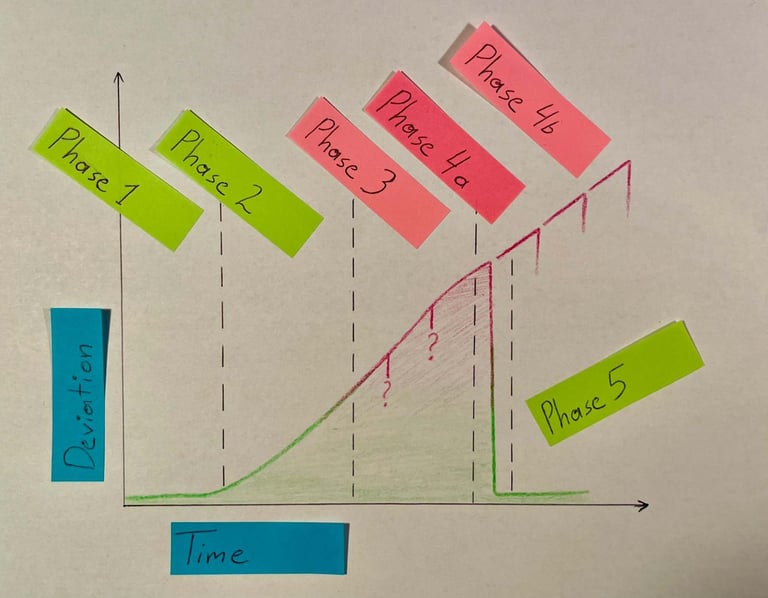
Model of self-inflicted suffering.
Phase 1) In this stage, an individual accurately observes reality. The individual ascribes value to life, people, things, concepts, and virtues in a way that reflects their true value. These observations shape the individual's understanding, beliefs, choices, and actions. This enables a life with minimal self-inflicted suffering – though it is important to note that it is impossible to perfectly align oneself with reality. Thus, there is always at least a small separation: Y can never truly be zero.
Phase 2) The deviation begins. This occurs for several reasons: desires can override convictions; self-deception can arise as a way to shield oneself from hard truths; lying to others can seem easier than facing consequences; lies told by others can be readily believed; doubt can supplant faith; fear can undermine courage. Whatever the reason – and there are far more than listed here – the individual, either intentionally or unknowingly, deviates from reality. In doing so, he sets himself up for a painful plummet back to reality.
Phase 3) The distance between reality and the individual's perception grows over time, and the potential suffering caused by the inevitable fall becomes ever greater. During this time, the individual may have multiple opportunities to recognize his deviation if he was previously unaware, or to admit his error if he was aware. This can, however, be challenging: recognition and admission are followed by the fall back to reality; continuing to live in denial avoids immediate suffering.
Phase 4a) The individual runs into the metaphorical post of pain. Reality forces him to acknowledge his deviation. If he has a soft heart and is humble enough to admit he was “wrong,” he endures the consequences and is even thankful that his error was revealed. This allows him to be grounded in reality once again.
Phase 5) The individual’s observations, understanding, decisions, actions, values, convictions, and beliefs have now moved closer to reality. The self-induced suffering has been overcome, and the individual has learned from his error.
Alternate: Phase 4b) There is an alternative route the individual may choose: denial. Obviously, refusing to admit the deviation that has occurred is not always possible, but persisting in one’s ways can sometimes be an option. This persistence delays the inevitable fall as the margin between reality and perception continues to widen.
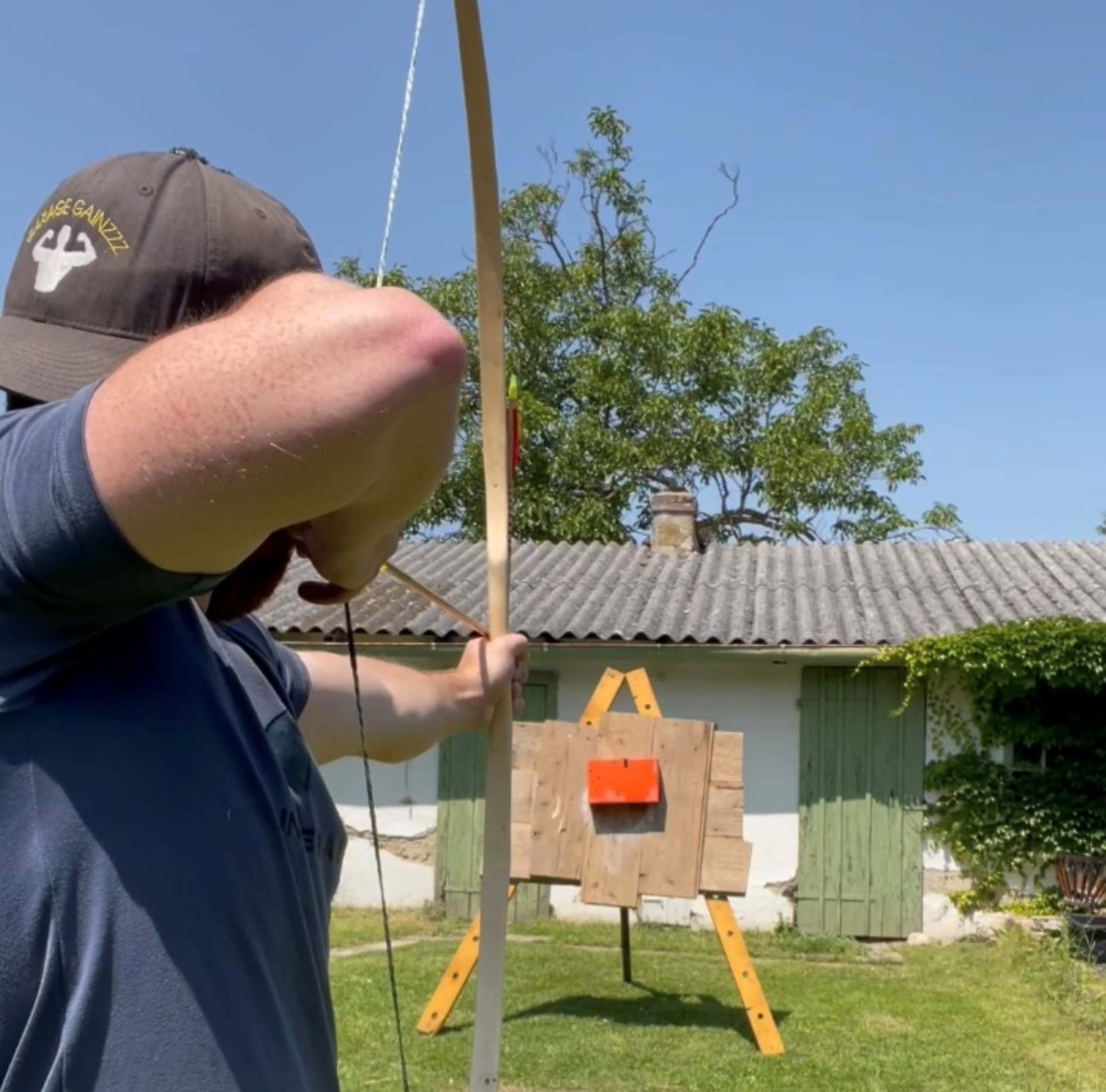
The truth: a target we must always aim at.
A few important comments are worth mentioning:
1) The responsibility for this “self-inflicted suffering” does not always lie solely on the shoulders of the individual who finds himself on the presented graph. Oftentimes, others can share at least some degree of responsibility.
2) This process of deviating from reality is rarely morally wrong. It is often simply a process of learning. What is problematic, however, is when the deviation is recognized yet willfully ignored.
3) This model is an extreme oversimplification of how deviation from reality occurs. In actuality, each area of life would have its own graph, and each deviation “mountain” would have smaller ups and downs as well.
4) This model assumes three crucial presuppositions that one must accept in order for it to be of any value:
a) There is an objective reality.
b) Truth is of utmost importance.
c) The value of people, concepts, and truth is inherent and unalterable.
If these presuppositions are not true, then this model is of little value.
Finally, what does all this mean?
If I base my life on truth, I will experience minimal self-inflicted suffering. If I am humble and always seek truth, my “falls” back to reality will be brief and undramatic.
If I deviate from reality, pain is the alarm bell that warns me of my error.
If I persist in my ways despite recognizing that I have strayed, I set myself up for severe self-inflicted suffering.
BUT…
A life well-aligned with reality only promises little self-inflicted suffering, NOT an absence of suffering altogether.
Even when grounded in truth, we will still suffer.
To be continued in Part II...
***


Thank you for reading Chisel&Feather!
The pain of thinking, Leonidas, and charitable lies: Click here to discover more about the importance of truth.
Chisel&Feather
Copyright© all rights reserved