
Why do I feel this?
Remembering when I first met my nephew
CONTEMPLATIONSINCERELY, COREN
I met my nephew for the first time when he was one month old, and I learned something new that day:
Our understanding shapes us in ways of which we are unaware.
It feels like it was just yesterday.
I was standing in my sister’s kitchen. She handed me her infant son. I cradled him in my arms.
I cared about him.
I loved him.
And I felt it.
But he didn’t do anything. He was just lying there.
He didn’t say, “It’s nice to meet you, uncle,” or “I’m sure we’ll be best friends.”
He did nothing, and yet I loved him immediately and with all my heart.
How could this be?
I have met many babies. And when I held them, I wanted them to feel safe and warm, and to a certain extent, I also loved them … but not in the same way that I loved my nephew.
He was different.
He was special to me.
But he was not special to me because of anything he did. He was not special to me because he was cuter than all of the other babies (though I would argue that he absolutely was). He was just special to me. That is it.
Why?
I think it is because of my understanding.
I love him because I understand the situation, and thus, certain feelings are evoked in me as I hold him. Let me explain …
Picture this: A stranger hands me a baby. I feel very little emotion at the time, because I have no connection to the child. I know I am holding a random baby, so it does not mean a great deal to me.
BUT, when my sister hands me her baby, my relationship with her and her husband is transferred to the baby. I care about them; they are my family, and so my nephew is also my family.
My sister could have tricked me, though. She could have handed me a random baby, claiming that it was hers. My understanding would not have recognized the scheme, and so I would have felt the same way as if it were actually my nephew.
Or, I could have been handed my nephew, being told he is a random baby, and I would have felt very little despite the baby being my actual nephew.
I hope this is all making sense.
I promise there is a point to this confusing list of baby hypotheticals.
My point is this:
Our perception and our understanding have an impact on our emotions.
Let me toss out a few more brief examples to illustrate:
I was not sad when my great-grandpa passed away. I was sad when I got the news that he had passed away.
I was not worried on my hike until I realized I was completely lost.
I was not excited when the teacher said a student got an “A” until I understood she was talking about me.
Our perception and our understanding have an impact on our emotions.
Why is this important?
I believe this is important because it emphasizes the value of aligning one’s understanding with reality.
If I understand something accurately and truthfully, my natural response can be appropriate, good, and, of course, in alignment with reality.
If my understanding diverges from reality, my natural response to situations will be misconstrued, and as a result, I will likely cause myself or others suffering.
Again, I think an example will help illustrate this:
Let’s say I believe people dislike me. In reality, they do not, but I misinterpret conversations and have low self-esteem, and so I conjure up an understanding that people generally hate me.
Imagine the suffering I cause myself because of this.
The feelings are real. They impact my decisions, my well-being, my confidence, and my actions; they impact every area of my life.
The feelings are real, but they are based on a false understanding.
In the past, I have always understood emotions to be something that happens to me. I feel things, and then it becomes a battle of wills: Can I control them, or will they control me?
I believe these observations still stand true. There certainly is a place for self-control, and it is very important.
However, I now also understand that emotions do not simply happen to me. They are a result of my understanding in any given circumstance:
If I think a lion is chasing me, I will feel fear, regardless of whether my belief is accurate or not.
Essentially, I have a say in how I feel, not only on the back end of emotions after they have flooded my brain but on the front end as well, as my mind and body are determining which emotions should be felt at any given moment.
When I held my young nephew, I felt love well up inside me because my mind accurately understood who he was.
Our understanding shapes us in ways of which we are unaware:
It impacts our emotions.
And so, I desire to align my understanding as closely as possible with reality.
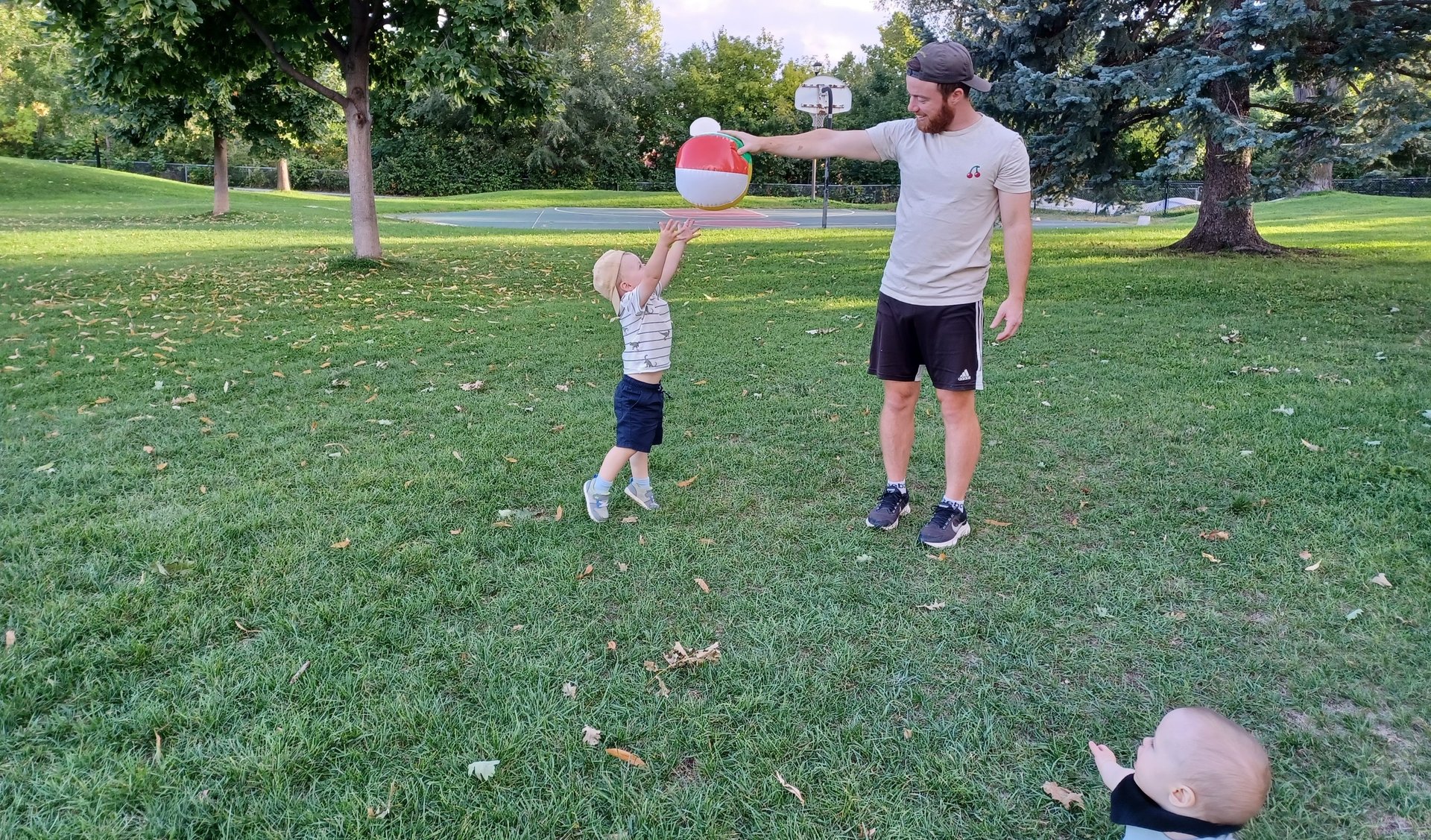
'Beach Ball' - I like to bully little kids
Chisel&Feather
Copyright© all rights reserved